

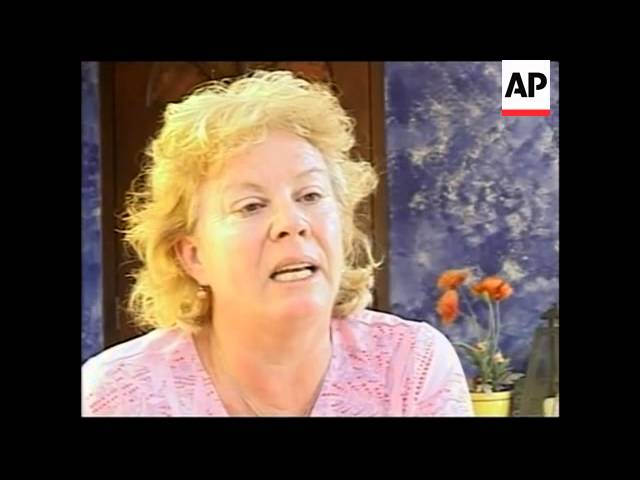
One person’s life can be thrust into the limelight due to someone else’s actions. Anita Van Der Sloot Hugen is a prime example, being recognized internationally as Joran van der Sloot’s mother. Joran, the Dutch national who was convicted of murdering Stephany Flores Ramírez in Peru in 2010, and suspected in the 2005 disappearance of Natalee Holloway, undeniably captured global media attention. As you might imagine, Anita’s role in the public eye stems directly from Joran’s criminal background, creating layers of public scrutiny and fascination.
Career as an Art Teacher
Anita’s professional life provides a contrast—steady and dedicated—as an art teacher in the Netherlands before her family’s move to Aruba. You might find it curious how little personal information is available beyond her teaching role. However, Anita’s focus was clearly on education and creativity, a world far removed from the legal troubles her family would later face. While her documented legacy remains limited to her teaching career, the role of an art teacher is no small feat; it involves nurturing creativity and providing young minds with the tools to think outside the box—a skill that translates well into many aspects of life.
Family Background and Move to Aruba
Anita married Paulus van der Sloot, a lawyer, which set the stage for a pivotal family journey. Together, they packed up their life in Arnhem, Netherlands, in 1990, relocating with their three sons to Aruba. Why the move? It certainly marks a turning point in their family story, yet details remain scarce on why exactly this transition was made. The family life they cultivated in the sunshine of Aruba stands in the shadow of the later controversies swirling around Joran, but it’s essential to remember the normalcy they once sought to establish in the Caribbean.
Response to Joran’s Legal Issues
Parenting is no walk in the park—Anita’s experiences have illustrated this in the most public of stages. When faced with Joran’s gambling issues in Peru and his avoidance of mental health care in the Netherlands, Anita’s reactions were described vividly in media interviews; shock and anger were at the forefront. She had hoped for her son to enter a treatment program to combat his gambling addiction and potential personality disorder. Instead, he left a note of intention to escape where “nobody knows me,” highlighting the stark differences between expectation and reality. It’s worth asking how much influence a parent truly has when their child veers off course.
Public Statements and Beliefs
Anita’s public reflections often reveal a mother grappling with stark choices between protection and justice. In interviews, she has described Joran as “not a monster,” while also insisting on accountability. Her belief in karma and reflection upon her parenting efforts take center stage, raising vital questions about personal responsibility and fate. Despite the painful unfolding of events, Anita stresses that her son must face the consequences of his actions as an adult. Isn’t it profound how she balances the idea of nurturing a child with the necessity for justice?
Current Public Perception
Fast-forward to today: public interest in Anita remains tethered to Joran’s high-profile cases. People continue to seek narratives that bind the criminal with the familial. Despite the enduring media focus, Anita maintains a life largely outside the public record. The lack of further personal or career details underlines this—the public’s fixation is squarely on her connection to Joran rather than her own life journey. The question stands—what other stories could Anita tell if the opportunity arose?
Conclusion
The good news is, in exploring the layers of Anita Van Der Sloot Hugen’s life, we uncover more than the headlines suggest. Her role as a mother in the spotlight, defined by the actions of her child, presents both challenges and reflections on privacy and public scrutiny. Make a plan to consider this in your own life: how do you handle the unexpected twists, the scrutiny, and the responsibility? Anita’s story reminds us of the relentless pursuit of resilience and the complexity of parental ties. It’s a balancing act between personal privacy and life’s public chapters.
To engage with stories like Anita’s and reflect on lessons applicable to your own contexts, review your operations to spot those time-sucks and focus on what’s truly important. For more insights, check out this resource that unpacks complex situations in relatable, down-to-earth ways. Let’s not stop observing how individual stories intertwine with broader life narratives, and find guidance that aids us in our personal and professional journeys.
Also Read
