

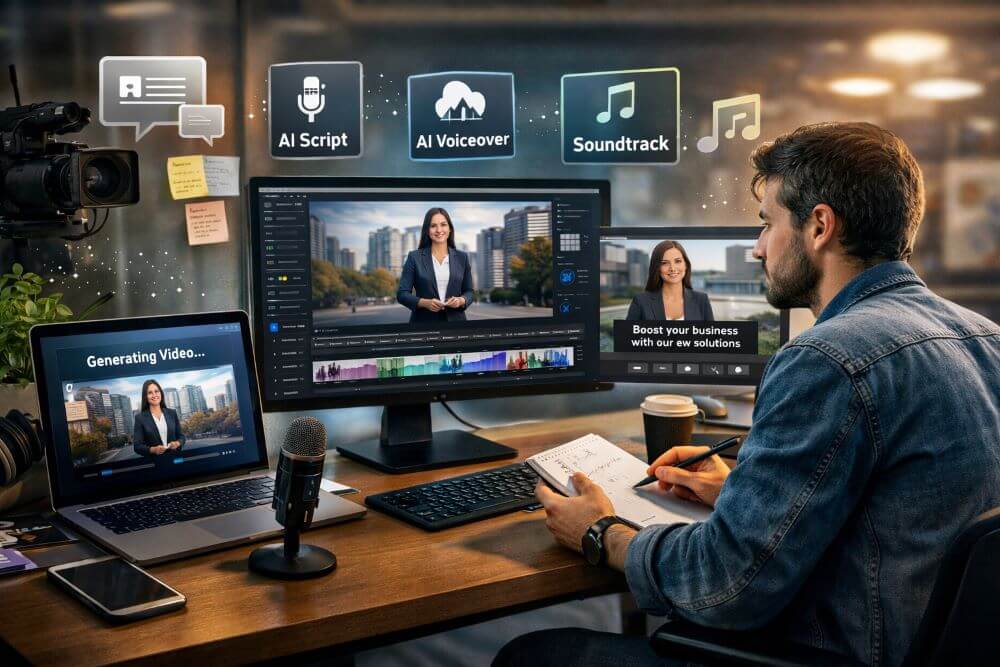
Entrepreneurs know that content drives growth, but producing high-quality videos often feels like a slow process. Founders juggle product decisions, customer support, marketing, and hiring. Creating video content can easily fall to the bottom of the list.
At the same time, demand for video continues to rise. According to a 2024 report cited by Forbes, over 91% of businesses now use video as a marketing tool because audiences engage with it more than text alone. The challenge is simple. Entrepreneurs need a faster workflow that turns ideas into scalable content without building a full production team. Modern tools and smarter processes make that possible. When used well, they allow founders to produce educational clips, marketing explainers, and brand stories in hours rather than weeks.
This guide explains how entrepreneurs design practical content workflows, how automation simplifies production, and how a video generator fits into a modern marketing system.
How do entrepreneurs build scalable content workflows?
Entrepreneurs build scalable video workflows by simplifying three steps: ideation, production, and distribution. Instead of traditional filming, many founders now turn written ideas into finished videos using automated tools and structured workflows.
The process usually looks like this:
Step 1: Turn ideas into scripts
- Founders begin with short prompts or outlines.
- The system converts those prompts into structured scripts.
- Messaging stays consistent with the brand voice.
Step 2: Automatically generate visuals
- Platforms generate scenes, graphics, and AI footage.
- Voiceovers and subtitles are added automatically.
- Music and pacing are aligned with the script.
Step 3: Publish and reuse content
- Videos are shared on social media, landing pages, and newsletters.
- Clips are repurposed into shorter content formats.
- Teams track engagement to guide future content topics.
With this approach, entrepreneurs produce a steady stream of videos without needing videographers, editors, or studio equipment. The workflow focuses on speed and consistency, so content creation supports growth instead of slowing it down.
How entrepreneurs use a video generator
Why do founders prioritize video today?
Video has become the most consumed form of digital content. Platforms such as YouTube, LinkedIn, and Instagram reward video posts with higher reach and engagement.
According to data summarized on Wikipedia, YouTube alone receives more than 500 hours of video uploads every minute.
For entrepreneurs, this shift means visibility often depends on video content. Businesses use it to explain products, share insights, and build trust with potential customers.
Common founder use cases include:
Brand storytelling
- Founder journeys
- Product origin stories
- Mission-driven content
Educational marketing
- How to solve customer problems
- Industry insights
- Short tutorials
Product communication
- Feature walkthroughs
- Product demos
- Customer onboarding videos
Because video communicates information quickly, it helps startups explain complex ideas in simple formats.
How can entrepreneurs produce content faster?
Speed comes from reducing unnecessary production steps. Traditional video workflows involve planning, filming, editing, and distribution. Each stage requires time and specialized skills.
Modern workflows simplify the process by moving creation closer to the idea stage.
Founders start with a simple prompt
A founder might write a short concept such as:
“Explain how our product helps small retailers track inventory.”
That idea becomes the starting point for production.
Automated systems build the video
Tools can convert prompts into scripts, generate visuals, add narration, and assemble the final edit.
Teams review and publish
Instead of building videos from scratch, teams review and refine content before publishing.
This approach lets entrepreneurs focus on messaging rather than technical production.
What does a modern video workflow look like?
A scalable workflow typically includes repeatable steps. Entrepreneurs often follow a weekly structure to maintain consistent output.
Idea collection
- Capture questions from customers
- Review search trends
- Turn blog content into video topics
Batch production
- Write several prompts at once
- Produce multiple videos in one session
- Maintain consistent branding
Distribution planning
- Schedule posts across multiple platforms
- Repurpose videos into short clips
- Add captions for accessibility
Batch workflows help founders maintain momentum while reducing the time spent switching tasks.
Where do automated tools fit in?
Automation tools reduce the complexity of production. Instead of learning editing software, entrepreneurs describe the content they want, and the system handles the assembly.
For example, a founder creating a product explainer might rely on an AI visual content creation platform such as invideo when using a video generator to transform a short prompt into a script, visuals, voiceover, subtitles, and background music. The result is a publish-ready video created in a fraction of the traditional production time.
These platforms also support multiple content types:
Marketing explainers
- Product introductions
- Feature announcements
Community engagement
- Customer success stories
- Founder updates
Business communication
- Internal training
- onboarding tutorials
Because the process begins with ideas rather than filming equipment, founders can experiment with more topics and formats.
How do AI tools support scaling?
Automation tools are not only about speed. They also help businesses scale consistent content across multiple channels.
Many entrepreneurs explore AI video apps that combine scripting, editing, and publishing in a single workflow. These make it easier to adapt videos for different audiences and platforms.
A founder might produce:
Short social videos
- LinkedIn insights
- Instagram clips
Educational long-form content
- YouTube explainers
- Webinar summaries
Event communication
- Announcements for professional event setups
- Highlight videos after conferences
This kind of scaling supports stronger audience engagement and helps build customer loyalty over time because audiences regularly receive helpful content.
What mistakes slow down founders?
Even with modern tools, workflows can break down if teams approach video creation without structure.
Common mistakes include:
Trying to perfect every video
Early-stage founders sometimes spend too much time polishing visuals instead of publishing useful information.
Creating content without a schedule
Irregular posting reduces audience engagement and makes analytics harder to track.
Ignoring reusable content
A single video can produce multiple assets such as clips, transcripts, and blog posts.
Entrepreneurs who treat video as an ongoing communication channel rather than a one-time campaign usually see stronger results.
How should founders plan scalable content?
Planning is the difference between occasional content and a sustainable strategy. Entrepreneurs often use simple frameworks to organize topics and maintain consistency.
Educational content
- Answer common customer questions
- Explain industry concepts
Authority building
- Share insights from real experiences
- Discuss market trends
Product understanding
- Demonstrate features
- Compare solutions
When these categories guide production, founders avoid the stress of constantly searching for new ideas.
Conclusion
Entrepreneurs today operate in a fast-moving digital environment where communication speed matters. Video has become one of the most effective ways to explain products, build trust, and share expertise.
A clear workflow changes how content gets produced. Instead of relying on complex filming setups, founders can start with ideas and convert them into finished videos using a structured process and a reliable video generator.
The result is consistent communication, faster marketing cycles, and content that grows alongside the business.
The real question for founders is simple. If video can now be produced as quickly as writing a message, how often should your business be sharing its ideas?
Frequently asked questions
How often should entrepreneurs publish videos?
Many startups publish one to three videos per week. Consistency matters more than volume. A regular schedule allows audiences to expect new insights while helping founders analyze which topics generate engagement and leads.
Do startups need a video production team?
Not necessarily. Many founders now produce videos using automated tools that convert ideas into scripts, visuals, and narration. A small marketing team or even a solo founder can manage the process using structured workflows.
What types of videos work best for entrepreneurs?
Educational explainers, product walkthroughs, and founder insights perform well. These formats answer real customer questions and help audiences understand the value of a product or service.
Can video improve startup marketing results?
Yes. Video content often increases engagement, time on page, and conversion rates because viewers understand information faster through visuals than through text alone.
How long should business videos be?
Short educational clips often perform best between 60 seconds and three minutes. Longer formats can work for product demos or detailed tutorials where deeper explanations help the audience.
Can entrepreneurs reuse video content?
Yes. A single video can become multiple assets, including social clips, blog content, newsletters, and presentation material. Repurposing content helps startups maintain a consistent presence without creating everything from scratch.
